The bin test
Where the favour budget goes, and where it gets wasted
Half of what goes in a welcome bag is used up by Sunday and half of it travels home. Deciding which half you are buying before you spend is the whole of this.
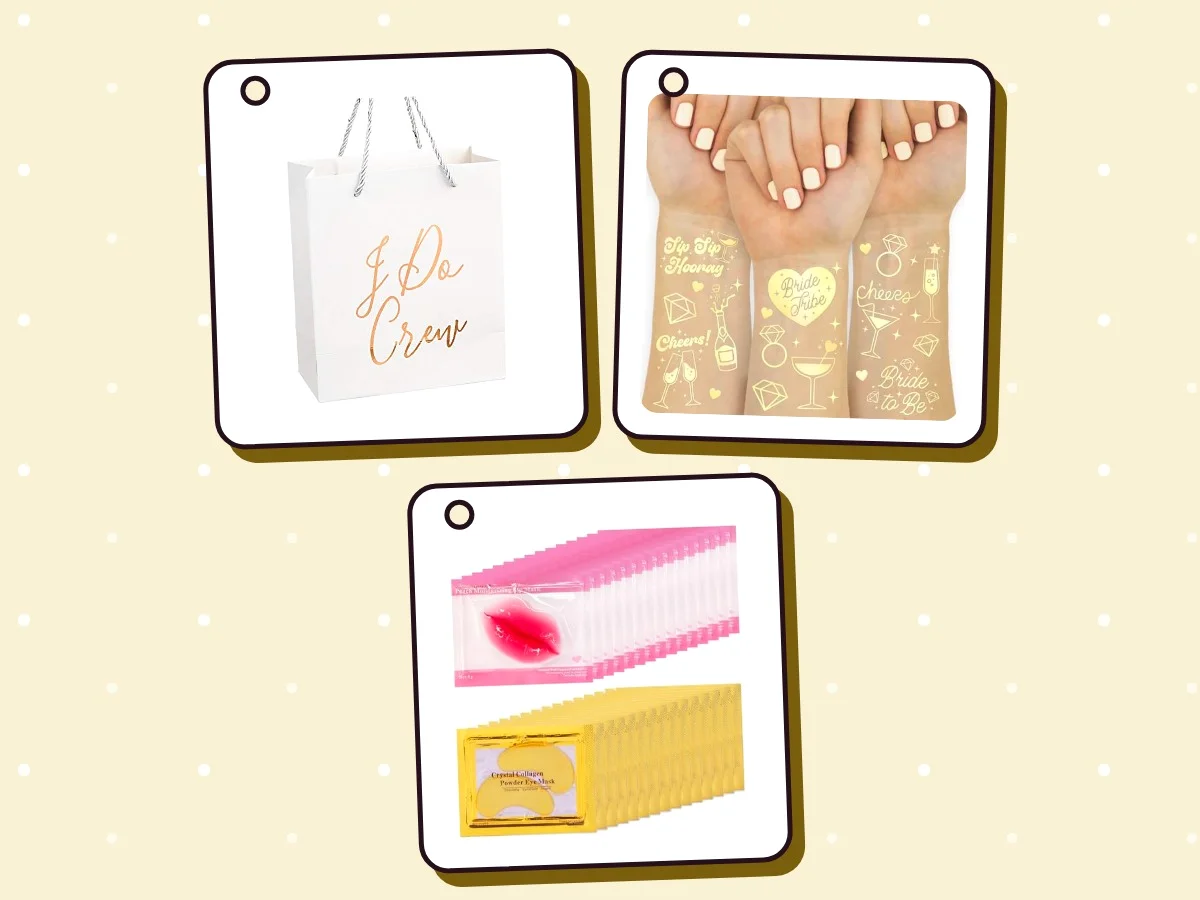
What a welcome bag is for
A welcome bag is the first thing anybody touches after a flight, and its whole job is to make the next two hours easier. Somebody walks into a rented house at nine at night with a case they have not opened, and on the bed is a bag with her name on it. What is in that bag decides whether it gets emptied before bed or carried home unopened on the Sunday, and the difference between those two outcomes is not money. It is whether the contents are used up or kept.
Start with a clear purpose. A bag should carry things the group will use inside the hotel room on arrival and over the first night. Small consumables work well because they are designed to be used up. Durable items have a place, but they are not fulfilling the immediate role of a welcome bag unless they will be used during the weekend. Because you will be assembling for a single group, quantity matters in a way that store descriptions do not capture. The favours shelf holds one hundred and thirty-four pieces, and every one of them falls on one side of a line: it is either used up over the weekend or it goes home in a case. Nothing on that shelf sits in the middle.
A sensible mix keeps cost per guest low while still feeling thoughtful. A small box that contains a sachet, a plaster and a pair of earplugs is a hangover kit. It is the favour people thank you for, which very few favours are. Temporary tattoo sheets and printed cups live in the used-up half. Tote bags and makeup bags live in the durable half. Those categories explain where the money moves after you decide what to buy. They also explain how much you need. If a pack prints a count, ten sits in the middle of the usual range and the largest runs to one hundred and twenty. That range helps you avoid buying two of the same pack when one will do.
So settle the purpose before you settle the budget. A bag packed for arrival holds different things from one packed for the last morning, and trying to make one bag do both is how it ends up costing twice as much and being half as useful.
The split: what gets used and what goes home
Divide your list into the used-up group and the take-home group. The catalogue counts are explicit about that split. One half of the favours shelf is durable, and the other half is items intended to be used over one weekend. Those are separate budgets. Money spent on one should not be counted as money left for the other.
Consumables are straightforward to picture. Temporary tattoos, printed cups, little kits and paper bags are designed to be consumed. A temporary tattoo sheet carries dozens of designs on one page, so one sheet covers a group of eight with plenty left over for a shower a month earlier. The tattoos take about a minute to apply and come off with oil rather than with scrubbing. Keep in mind what regulators say about decal tattoos. The United States Food and Drug Administration describes a decal temporary tattoo as one that may last a day or up to a week or more, says it has received reports of reactions to some decal-type temporary tattoos, and advises trying one on a less conspicuous part of the body before putting it on a face. Quote and attribute that information to the agency when you consider tattoos for faces or sensitive skin.
Durables include totes and makeup bags and the small keepsakes that travel home. A tote bag performs three jobs across two days. It carries the welcome gift, it is the pool bag on Saturday, and it takes home what does not fit in the case. Because durable items must travel with the guest, their cost should reflect that constraint. A boxed candle or an engraved keepsake costs several times what a consumable costs and has to travel home in a case that is already full. That extra burden changes where the money works best. Spend on durables when you want a long‑term reminder. Spend on consumables when the goal is an immediate lift.
When you plan, keep arithmetic simple. If a pack prints ten and your group has eight, one pack will cover everyone. If a sheet covers eight, you need one sheet per eight guests. Those calculations stop the impulse to double up on items you do not need.
Packing for night one: immediate delights
Night one is about arrival rituals, comfort and small surprises that matter inside a hotel room. Guests have luggage, jet lag and a short time to connect. The welcome bag is a bridge between travel and the weekend. Pack it to make the first hour easier and more pleasant.
Start with practical comforts. A hangover kit is small and exact. It contains a sachet, a plaster and a pair of earplugs, and it is the rare piece of a welcome bag that gets opened before breakfast. Include one per person if you expect late music or unfamiliar mattresses. Next, add single-use items that read as thoughtful rather than wasteful. Printed cups and small kits fit this role. They are used during the night or at breakfast and leave nothing awkward to carry home.
Temporary tattoos make good arrival entertainment because they require little space and create a quick group activity. One sheet covers eight people with plenty left over. They take about a minute to apply each, so watch the clock if you plan a group session. They remove with oil, which is gentler than scrubbing. Keep the FDA guidance in mind and consider offering a tester on a less conspicuous area first if anyone expresses concern.
How you package matters. Gift bags come ten to a pack more often than any other number, so a group of eight buys one pack rather than two. Paper bags stand up on a bed and photograph sharply. Organza packs completely flat, which matters if the bags are being filled after a flight. If you are stuffing at arrival, choose the bag that keeps contents visible and upright. Finally, think about timing. Items meant to be used on night one should be easy to access inside the bag rather than buried under larger keepsakes. The small wins at the start shape the mood for the rest of the weekend.
Packing for the last morning: what travels and what does not
The last morning is minimalist by necessity. Suitcases fill back up and people sort what will squeeze home. A welcome bag that worked well on arrival should not complicate this exit. Think about what will realistically travel and what will be left behind.
Durable items are the ones that go home. Tote bags and makeup bags fit into suitcases or hand luggage, and they have ongoing use. A tote performs three jobs across two days: it carries the welcome gift, it is the pool bag, and it carries home overflow from suitcases that are already tight. Those three roles mean a tote can justify a larger share of the durable budget because it will be used during the weekend as well as afterwards. A boxed candle or an engraved keepsake is another durable category, but remember that a durable kept must be carried. A boxed candle costs several times what a consumable costs and will need a place in an already full case.
Consumables do not complicate packing. Paper gift bags that held arrival items collapse and can be left in the hotel bin. Organza packs lie flat and travel poorly if filled with spilled powders. If you do not want paper residue in a suitcase, choose consumables that use no breakable or bulky packaging. Temporary tattoos and single‑use sachets are disposable in the same way a used cup is disposable. They free up suitcase space rather than occupying it.
If a pack prints a count, ten sits in the middle of the range used for favours and the largest runs to one hundred and twenty. For a group of eight, one pack of ten will cover all guests for single‑use consumables. That arithmetic keeps you from overbuying and from creating things that must be carried home by people who do not need them.
When you assemble, separate the items that should be used before departure from those that will be taken home. Label them mentally or physically so the last morning is quick. Less friction at exit is a kindness.
Where to spend the durable money
Deciding where durable dollars go means deciding what you want the weekend to look like after people leave. A tote bag has utility during the event and usefulness afterward. That dual role explains why it is often the better place to spend durable money rather than on an ornate object that will require a box in a suitcase.
Judge a durable by three things: what it does over the weekend, what it does after it, and what it costs to carry home. A makeup bag used for toiletries in the hotel will sit in a cosmetic drawer back home for years. A tote bag will carry both the welcome contents and the pool towel, and finally it will be the bag that prevents last-minute spills in a suitcase. Money applied to those items buys practical value at the time of the event and later.
Compare that to keepsakes that are not heavily used during the weekend. A boxed candle or an engraved keepsake is a thoughtful marker. It costs several times what a consumable costs and must travel home in a case that is already full. That travel cost is real even where it is not money. A keepsake is a present bought on purpose, not a convenience for the weekend, and it is worth buying with that difference in mind.
If you have limited durable funds, favour items that carry multiple roles. The tote is the clearest example. It acts as the welcome container, the pool bag, and the take‑home carrier. In arithmetic terms, a single tote replaces three single‑use roles. That multiplication of utility is why a modest investment in a good tote often delivers more value than a pricier keepsake that sits unused.
Finally, remember that durability does not mean large. Small, well-made items that are used will be appreciated more than oversized objects that add to luggage stress. Choose durable items that earn their place in a guest’s life.
What ends up in a hotel bin
Some things will not survive the weekend. They are designed to be used and then discarded, or simply to be left behind. That is not failure. It is good design when consumables perform their role and disappear without becoming baggage.
Paper gift bags are an obvious example. They come ten to a pack more often than any other number. For a group of eight, one pack will cover everyone, and the empty bags will be left behind, folded or not. Paper stands up on a bed and photographs sharply. That makes it a strong choice for arrival presentation, but it also makes it disposable. If someone prefers to keep the bag, they can. Most will not.
Organza packs behave differently. They pack flat and save space when empty, which matters if the bags are being filled after a flight. Once filled, though, organza is not as robust for carrying away toiletries or small wet items. When used for arrival gifts, organza tends to be used and then stored flat, or else abandoned when suitcases are tight.
Consumables such as temporary tattoos, sachets and single-use kits are meant to be used and then disposed of. A temporary tattoo sheet carries dozens of designs on one page, so one sheet covers a group of eight with plenty left over. A tattoo takes about a minute to apply and comes off with oil. Those two facts are the whole case for them: a minute to put on, two days of wear, nothing to pack home. They do not, and should not, create lasting clutter.
Durables that are not used during the weekend are the problem. A decorated keepsake that never leaves a dresser drawer is a purchase that did not earn its space. To prevent that, choose durable items with clear weekend utility. The items that end up in the bin are usually the ones that were never needed in the first place.
A practical checklist and final sums
Make decisions with a short checklist to keep money from drifting into the wrong category. Start by choosing the ratio of consumables to durables you want. Remember what that shelf is made of: fifty-three tote bags against fifty-four gift bags, tattoo sheets and sticker packs, out of one hundred and thirty-four pieces. Decide which of the two your money is on before you open a single card.
Second, do the simple arithmetic for counts. If a pack prints ten and your group has eight, buy one pack. If a tattoo sheet covers eight, one sheet will serve the group and leave spare designs. Ten minus eight equals two spare gift bags. Those spare two are insurance but not a justification for doubling everything.
Third, prioritise function for durables. Ask whether a tote will be used across two days. If yes, a higher durable spend is sensible because the tote performs three jobs: the welcome container, the pool bag, and the home carrier. If the durable item will not be used during the weekend, do not overpay for it.
Fourth, plan for departure. Keep consumables near the top of the bag for last‑minute use. Keep durables packed so they can be slid into a suitcase. Paper bags photograph well but are disposable. Organza packs are flat and convenient if you are stuffing bags after a flight.
Finally, respect sensible safety notes. The United States Food and Drug Administration describes decal temporary tattoos as items that may last a day or up to a week or more, reports reactions to some decal-type temporary tattoos, and advises trying one on a less conspicuous part of the body before applying it to a face. Attribute that guidance to the agency when you decide where and how to use tattoos.
A welcome bag that balances used-up pleasures with one or two useful durables will feel generous without creating baggage. Keep counts simple, buy for needs at arrival and exit, and let the small, well-timed items do the work.
Everything counted here was counted by the Bride Squad planners out of the shelves themselves, which is why the numbers move when the shelves do.