Read the wording first
What is in a sash pack, and how many you need
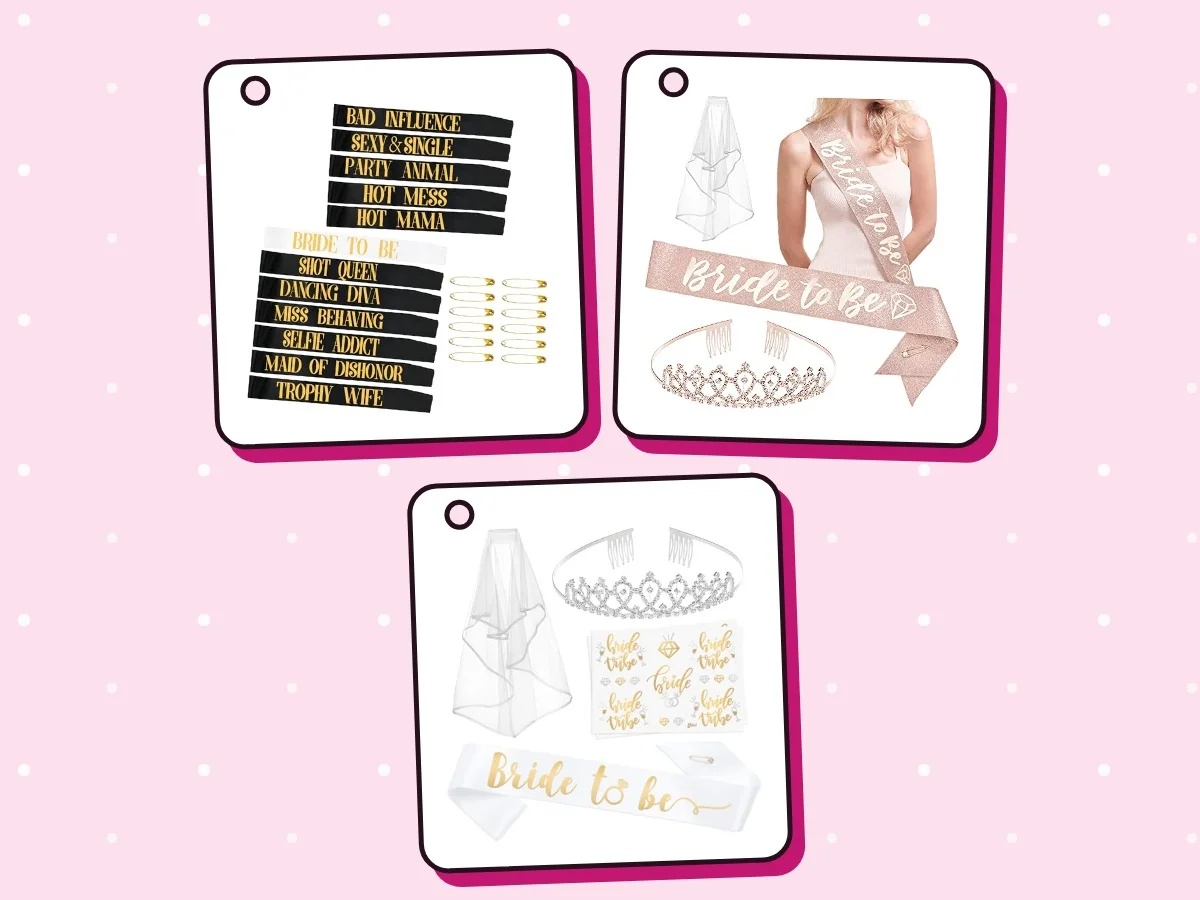
A photograph of seven satin bands says almost nothing about what arrives. One says BRIDE and six say something else, or all twelve say the same thing, and only one of those leaves the bride visible in a bar.
What a sash is and why it is the easy purchase
A sash is a single long band worn over the shoulder and fastened at the hip. It does not need a size. That makes it the simplest item to order for a group whose measurements you do not have. One band fits a wide range of people because it sits across the body rather than around it. For the person organising the weekend that matters more than you expect. You can choose a sash before anyone in the group has answered a question about fit. The sash shelf is the largest single group in the Bride Squad catalogue, with seventy-seven sash styles to read through. That variety matters when colour and wording are both important to your plan. The catalogue lists forty-two different colour names across the sash shelf, and some names such as rose gold, blush and champagne cover a range of pinks. Look at the photograph as well as the colour name. Photographs show sheen, print placement and how a colour sits next to a dress. A satin sash catches light in one way and glitter in another. Because size is not a factor, your choice is mostly about how the sash reads and how it behaves in transit. If you want a bride to be plainly visible in a crowd, the sash is often the single easiest way to achieve that for the whole group. It is also the item that creates the fewest headaches at fitting time, because you do not have to measure or guess waist sizes. Read the product images, note the fabric type mentioned with them, and keep in mind that a sash can crease in a suitcase or shed glitter onto a black dress. Those behaviours affect how the item looks on the morning and the second day of the weekend.
How pack counts actually work for a weekend group
When a pack prints a count the number seven is the middle of the range. That is not seven sashes for seven people. It is one bride band and six others. A printed seven therefore supplies eight people in total when you include the bride. Twelve-packs are the next most common size in the catalogue. Those twelve-packs contain twelve identical bridesmaid bands rather than a bride band plus others. The catalogue also includes much larger packs that run into the hundreds, and those are sold for showers rather than for a weekend. For a group of eight you need one bride sash and seven non-bride sashes. For nine people you need one bride sash and eight non-bride sashes. The two ways sets are sold matter here because one type of set will make the bride stand out and the other will not. One set is a bride band plus six bands that read differently, which leaves the bride distinguishable in a crowded bar. The other is twelve identical bridesmaid bands, which gives you a uniform group with no single sash labelled for the bride. Decide first whether you want the bride obvious in the room. If the answer is yes, a set that includes a labelled bride band is the direct route. If the answer is no, a twelve-pack of identical bands will give matching sashes for the whole party. Either choice leads to a follow-up decision about spares, because buying extra single bands separately often produces a near match rather than an exact match.
Wording, fonts and photographs: reading the small things
Photographs do more than show colour. They show how wording sits on the band, how wide the lettering is, and which font the supplier has used. Sashes with similar phrases can look very different in reality because the font weight, line height and spacing change the impression of the words. A photograph of a sash that says Bride in a script font will not look the same as the same word in a stark block font. That difference matters if your group plans pinned photos or a night out where the sash must be legible at a distance. The catalogue sometimes describes the phrase and gives a picture that shows the exact lettering. Read both together. Another common issue is the mismatch that comes from spares. If you order one additional band separately it may be a shade off in satin or it may use a different font in the lettering. Those small differences are visible when people stand together. Colour names do not map exactly onto a single shade either. Rose gold, blush and champagne each cover a range of pinks, so a sash named blush in one photograph could sit noticeably different beside a dress than a blush sash pictured elsewhere. If you are making the call from a photograph rather than from real life, measure your tolerance for variation. If absolute visual consistency matters, choosing a single pack type that contains identical non-bride bands avoids the risk of mismatched spares. If you prefer a labelled bride sash, accept that the non-bride bands that come with that set will have their own look and that any additional band bought later may not match it perfectly.
What will be in the bag
Open a sash pack and what you get is bands; the question is which bands. A set with a labelled bride band and six different squad bands makes one person obvious across a room. A set of twelve identical bridesmaid bands makes the group uniform and leaves the bride to a veil or a tiara instead. Many sets arrive with a veil folded in among the bands, which is why a veil ordered on top of a set is the commonest duplicate in a bachelorette order. Read the contents line before you add one. Veils and tiaras are bought for one person rather than by the head count, so they are the two lines on the list where the size of the group does not matter at all. A comb veil grips hair that has been set and slides out of hair that is clean and loose, so it belongs to the afternoon somebody has booked the salon for. A tiara survives a whole evening and a taxi home. If the bride is wearing her hair down on the Saturday, the comb is the wrong piece, and that is a decision for the Tuesday rather than for the morning. Topping a set up later rarely works. Satin comes out a shade off between production runs and the lettering is set from a different font, so a band added in March stands next to eight bands from January and looks like what it is. Buy the larger pack first and keep whatever is left over.
How the fabric behaves over two days
The way a sash looks on arrival is not always how it looks at midnight or the next morning. Satin creases in a suitcase. That crease will soften with a careful hand iron or by hanging the sash in a steamy bathroom, although ironing may not be practical on the morning of a busy schedule. Glitter sheds. When glitter is present it can leave small particles on other garments, and that shedding is particularly visible on dark fabrics such as a black dress. Consider the outfits the party will wear beneath the sashes and whether you can tolerate a light dusting of glitter. A photograph shows sheen and texture and nothing at all about the way satin folds inside a packed bag. If you plan to travel by plane or to use tight suitcases, think about how you will unpack and touch up the sashes on arrival. A tiara is more robust than a veil over the course of an evening because the tiara survives being handled and moved more easily. That makes a tiara a practical choice if you expect a lively night out. Veils are more fragile in use and a comb veil will not hold in hair that has not been set. For a two-day weekend you might choose a veil for daytime photos and switch to a tiara for the evening. That choice will change how you pack and who is responsible for keeping the headpiece safe between events.
The veil question and exact counts for eight and nine
You have two linked decisions to make for a group of eight or nine. The first is how obvious you want the bride to be. The second is how much visual consistency you need among the non-bride sashes. For eight people you need one bride sash plus seven non-bride sashes. A pack that prints the count seven supplies one bride band and six others, so it leaves you one non-bride sash short. Buying a single spare band to top up that set is possible, but separate spares rarely match the original exactly. An alternative is to buy a twelve-pack of identical bridesmaid bands and add a set that contains a bride band so the bride will still be distinguishable. That combination gives you more non-bride sashes than you need, but it guarantees either a labelled bride band or a uniform group, depending on which packs you choose. A party of nine needs the bride band plus eight others, and a single seven-count set is short by two. A twelve-pack covers the non-bride count with room to spare. Adding a set that includes a bride band will supply the labelled sash. Decide whether you prefer fewer packs and accept small mismatches from individually purchased spares, or whether you want to accept extras so that the party is visually consistent and the bride remains distinct. Also consider whether you want a veil. Many sash sets already include one, and ordering a separate veil in addition to a set that contains a veil creates a duplicate. If you expect loose hair on the morning, a comb veil may not hold. If you expect a busy evening, a tiara will survive the night better than a veil. Choose based on the hairstyle and the look you want to keep intact across both days.
Everything counted here was counted by the Bride Squad planners out of the shelves themselves, which is why the numbers move when the shelves do.