Counted, not guessed
What eight people need for a bachelorette weekend
One list, in the order the things get bought, with the count beside each line. The pieces that need a size from every person come first, because those are the ones that hold the whole order up.
Start with the one thing that holds everything else up
Eight people going away for a weekend need about nine separate decisions, and only one of them has a deadline set by somebody other than you. That one is sizes. Shirts and tank tops are the only things in this catalogue that need an answer from every person, and almost all of them are printed when they are ordered, which means the clock does not start when you press the button. It starts when the last person in the group chat replies.
So ask on the day the flights go in the diary. Not the week after, when the house is booked and everybody has stopped reading the thread, and certainly not six days out. Three of the fifty-six shirts here arrive as a pack. Everything else is one shirt at a time in a named size, and the run stops sooner at the top than a high-street run does, so the person who wears the largest size is the one whose answer you want first rather than last.
Everything else on this list can wait, and most of it can wait comfortably. That is worth knowing, because the temptation when a weekend is six weeks out is to buy the fun things first and leave the boring question of who wears what until the fun has run out.
What one sash pack actually covers
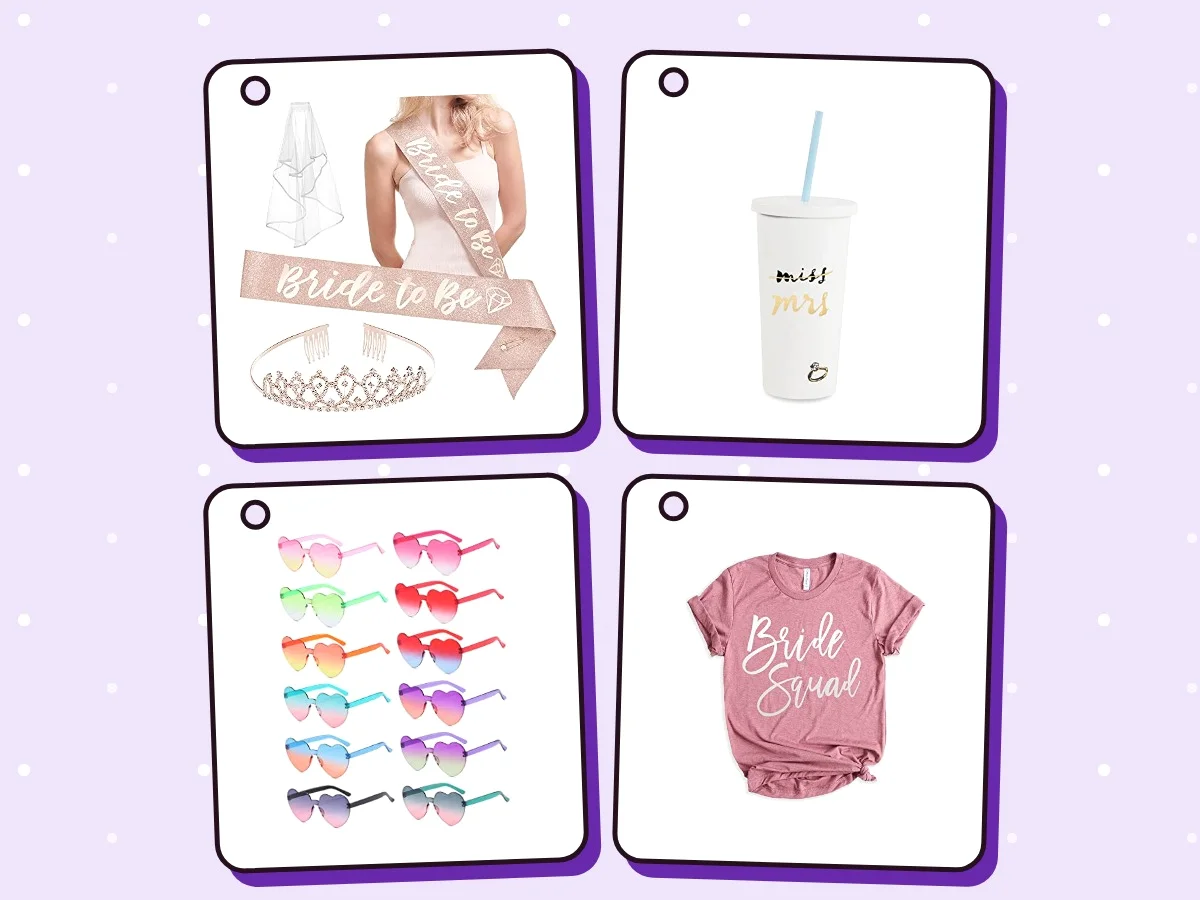
A sash is the opposite of a shirt. It needs no size, it fits whoever puts it on, and it can be ordered before anybody has told you anything about themselves. That single fact is why the sash shelf is the largest group in the shop and why it is the sensible place to spend the first evening.
The number to watch is the count on the pack. Seven is the middle of the range, which means one band that says BRIDE and six that say something else. If there are eight or nine of you, seven leaves you short, and the obvious repair is to buy a spare separately. Do not. Spares bought on their own almost never match: the satin is a shade off, the lettering is set in a different font, and the two people wearing the odd ones out are in every photograph taken over two days. Buy the twelve-pack instead. It costs a little more than a seven and a single, and it comes out of one box.
Read what the bands actually say before you read the colour. A set of one bride band and six that read differently makes the bride findable across a crowded bar. Twelve identical bridesmaid bands make a coordinated group with nobody at the middle of it. Both of those are real choices. The only wrong version is the one where the bride discovers which you made at the airport.
The head count, and the two spare
Order for two more people than the group chat says. Somebody brings a sister, somebody who said no in March says yes in May, and a spare sash costs less than a missing one. That rule applies to everything worn: sashes, sunglasses, caps, socks, tattoo sheets.
Sunglasses make the point best. They come ten to a bag and cost less per pair than a coffee, and by Sunday morning two pairs have gone under a car seat. They are packed and priced like favours rather than like eyewear, which is exactly how they should be bought. Order the head count, add two, and do not spend the difference on a better pair, because the better pair is the one that gets sat on.
Caps are the other half of that shelf and behave in the opposite way. A cap is one item at a real price, it survives the weekend intact and it goes home in the case, and it is the piece somebody is still wearing in a photograph two years later. Buy those by the head count exactly. If the plan involves a boat or a pool, buy them at all: sunglasses go overboard and a cap with a mesh back dries.
What is bought for the room rather than for the people
Balloons, banners and backdrops are counted once, for the wall. Counting them per head is the single fastest way for a decoration budget to double between Tuesday and Wednesday, and it happens because everything else on the list is counted per person and the habit carries over.
Balloon packs run large for a good reason. A garland across the back of a rented sofa swallows far more balloons than the photograph suggests, and the kits are sold on the assumption that you will pop a few while you learn how the strip works. Where a pack prints a count, sixteen is the middle of the range and the biggest run to a hundred. If this is the first garland you have built, buy the kit rather than loose bags: the kit arrives with the strip, the glue dots and a mix of sizes already worked out, and the mix is what makes a garland look like a garland instead of a row.
Banners divide on one word, and the word is pre-strung. A pre-strung banner goes up in two minutes with two pieces of tape. A banner that arrives as loose card letters and a reel of ribbon is an evening of somebody's life, spent on a hotel floor, with the letters in the wrong order at least once. Both are worth buying. Only one of them can be bought in the week of the weekend.
Drinkware, and the line between a keepsake and a bin
This is where the money quietly goes, and the split is simple once you see it. A printed party cup is used on the Saturday and thrown away on the Sunday. A named tumbler travels home, sits on a desk through the winter, and is the one object from the weekend anybody still owns a year later.
Buying tumblers for a whole group when a stack of printed cups would have done is how a drinkware order doubles. Buying cups when the group expected something to keep is how nothing survives the weekend. Most groups do both: cups for the house, one tumbler each as the thing that lasts, and the budget lands about where it started.
One arithmetic note that pays for itself. A pack of twelve usually costs less per piece than two packs of six, so where a shelf offers both, the twelve is the cheaper cup even when the number on the front is bigger. And if anybody is flying, can coolers are the most efficient thing in the shop by weight: they pack flat, weigh almost nothing, and a dozen of them takes less room in a case than one tumbler does.
What can wait until the last week
Temporary tattoos, printed cups, gift bags and anything else handed out on the first evening. None of these needs a size, none needs a decision from anybody else, and none of them takes more than a day or two to arrive.
Tattoo sheets are the best value on that list. One sheet carries dozens of designs, so a single sheet covers eight people with plenty left over for a shower a month earlier, and each one takes about a minute to put on. Hand them out on the Friday rather than saving them for the Sunday: a tattoo applied on the first night is in every photograph taken over two days, and one applied on the last is in none. Take a bottle of baby oil or a makeup remover as well, because they come off with oil rather than with scrubbing, and that saves somebody a bad ten minutes at the sink before a flight.
Robes and socks sit at the quiet end of the same week. A satin robe sold as one size is cut generously rather than universally, so if the group is not all one shape, the ones that print a real size run are the ones to read. Socks fit anybody, arrive in packs, and are the only thing bought for this weekend that gets worn again in February.
The list, in the order it gets bought
Six weeks out, ask for shirt sizes and order nothing else until they arrive. Five weeks out, order the sashes, in one pack, with two more bands than there are people. Four weeks out, the sunglasses by the head count plus two, and the caps by the head count exactly.
Three weeks out, move to the room: one balloon kit, one banner, one backdrop if there is a plain wall worth standing in front of. Two weeks out, the drinkware, split between cups for the house and one keepsake each. The week before, the tattoos, the gift bags and whatever goes in them.
That is nine purchases for eight people, and only the first one depends on anybody but you.
Everything counted here was counted by everyone at Bride Squad out of the shelves themselves, which is why the numbers move when the shelves do.